
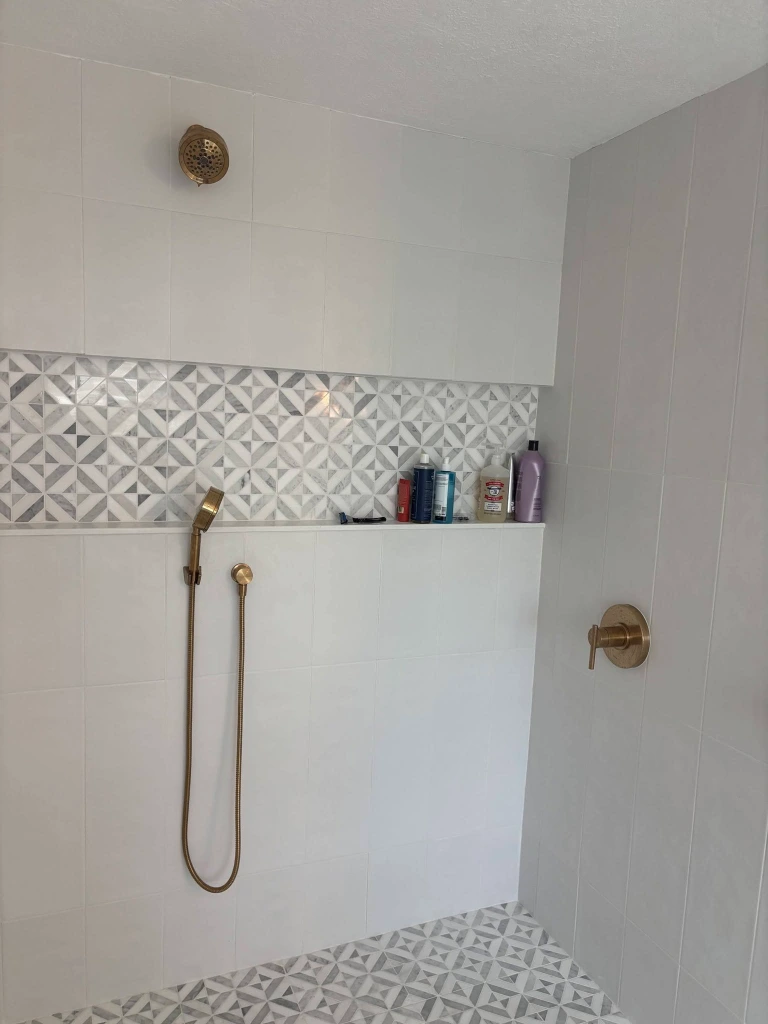
Waterproofing & Mold Remediation
Bathroom Waterproofing & Mold Remediation in Sarasota, Fixed Right, Not Just Covered Up.
If your Sarasota bathroom was built before 2004, there's a good chance there's no real waterproofing membrane behind that shower tile, just drywall, doing a job it was never rated for. That's what bathroom waterproofing in Sarasota actually means: we find it, fix it, and if there's already mold behind the wall, we coordinate the remediation and rebuild it to current Florida Building Code, permit included.
Licensed & Insured · Available 7 Days · Usually Answers Within the Hour
Quick Answer
What does bathroom waterproofing and mold remediation cost in Sarasota?
Installing a proper waterproofing membrane during a normal bathroom remodel costs $600–$1,200. Discovering mold behind an existing shower wall and having to remediate and rebuild it runs $8,000–$18,000, depending on how far the moisture traveled. Most Sarasota homes built before 2004 have no continuous membrane behind the shower tile at all, just drywall behind grout, which was code-compliant at the time and is a slow-moving problem today.
Mold from a sudden, accidental event (a burst pipe, wind-driven rain during a storm) is usually covered by homeowners insurance under Florida Statutes §627.70131 and §627.70132. Mold from a long-term leak or humidity generally isn't. We coordinate directly with adjusters when a claim's involved.
Why This Comes Up So Often Here
Bathroom Waterproofing Isn't Optional in a Sarasota Climate
We open up more shower walls in Sarasota County than almost anything else we do, and the pattern's the same more often than not: standard drywall directly behind the tile, no sheet membrane, no liquid-applied barrier, nothing between the grout lines and the framing but paint and hope. That was normal construction before Florida's 2004 Building Code update required a continuous waterproofing membrane in wet areas. It wasn't a shortcut at the time. It's just what "built to code" meant back then.
The problem is Sarasota's climate doesn't forgive that gap the way a drier state might. At 70–90% relative humidity for much of the year, moisture that gets past unsealed grout has nowhere to evaporate to, it sits in the wall cavity, soaks the drywall, and turns into mold you can't see until the smell shows up or the grout starts staining no matter how many times you clean it. We've found this in the majority of the pre-2000 shower gut-outs we've done, sometimes years before the homeowner had any idea it was there.
Hurricane season adds another layer to it. Wind-driven rain can push moisture through places a normal shower never sees, around window flashing, through a compromised roof vent, along an exterior wall the bathroom happens to share. We've had a storm roll through mid-project more than once, and it's a routine part of building here in June through November, not a reason to panic. It's exactly why we build the waterproofing system to hold up on its own, not to rely on the roof and the walls around it staying perfect forever.
Salt air adds one more variable if you're west of US-41, closer to the barrier islands or Sarasota Bay, it accelerates corrosion on anything metal behind the wall, from old galvanized supply lines to the mounting hardware on a shower valve. When we open a wall that close to the water, we're not just checking for moisture, we're checking what condition the plumbing and fasteners are in too, because a membrane won't fix a corroded pipe that's the actual source of the leak.
If you're already planning a tub-to-shower conversion, a new walk-in shower, or a full bathroom remodel, proper waterproofing happens automatically as part of that scope, this page is for the more common case: your bathroom looks fine on the surface and just needs the membrane behind the tile fixed without redoing everything else.
Noticing grout stains, a musty smell, or soft tile?
A moisture check takes minutes and tells you exactly what's going on before you spend money guessing.
What to Look For
Signs Your Shower Doesn't Have a Working Waterproofing Membrane
None of these mean you definitely have mold behind the wall. All of them mean it's worth a moisture check before you ignore it or tile over it.
Grout That Keeps Staining
Dark grout lines that come back within weeks of cleaning, especially low on the wall or near the floor.
A Musty Smell
A persistent damp or musty smell in the bathroom, or in a closet that shares a wall with the shower.
Soft or Spongy Tile
Floor or wall tile that flexes slightly under pressure, a sign of moisture-damaged substrate underneath.
Staining on the Other Side
Water staining or bubbled paint on the back side of the shower wall, often noticed first in a closet.
Cracking Grout or Tile
Grout that cracks repeatedly in the same spot, even after re-grouting, usually a movement or moisture issue underneath.
A Pre-2004 Home, Never Opened Up
If your shower has the original tile and your home was built before 2004, assume there's no membrane until proven otherwise.
How We Handle It
What Waterproofing & Mold Remediation Actually Looks Like
Moisture Check
We use a moisture meter before we ever pick up a demo hammer, so we know what we're actually dealing with, not guessing.
Demo & Remediation
If there's mold, we bring in a licensed mold assessor and remediator for anything over 10 sq ft, per Florida law, not a guy with bleach.
Rebuild to Code
Cement board, a continuous sheet or liquid-applied waterproofing membrane, and a properly sloped pan, current Florida Building Code, every time.
Permit & Inspection
We pull the Sarasota County permit and schedule the inspection ourselves, you get the paperwork that protects your insurance and resale value.
If your project is tied to an insurance claim, we document everything, photos, moisture readings, scope of damage, before demo starts, and we coordinate directly with your adjuster. Florida Statute §627.4133 also means your insurer can't drop you just for filing one water-damage or mold claim.
If You're Filing a Claim
How We Handle a Mold or Water-Damage Insurance Claim
If the damage came from a covered event, a burst supply line, a failed water heater, wind-driven rain during a named storm, you may have a valid claim. Here's how that process usually goes when we're involved from the start.
Document before anything moves
Photos, moisture readings, and a written scope of the damage, before demo starts. Adjusters want to see the "before" state, and once we tear into a wall that evidence is gone.
File within the statute window
Florida Statute §627.70132 gives you up to two years from the date of loss for most covered-peril claims. Don't wait, the sooner it's filed, the easier it is to tie the damage to a specific covered event instead of "ongoing deterioration."
We meet the adjuster on-site
We walk the adjuster through what we found, in contractor terms, so the scope of approved repair matches the actual damage, not a lowball estimate based on a quick look.
Remediate, rebuild, and permit
Once approved, remediation and rebuild proceed the same way as any other job, licensed mold assessor if needed, permit pulled, inspection scheduled. You get the paperwork for your records either way.
We're not public adjusters and don't negotiate your policy for you, but we've been through this process enough times in Sarasota County to know what an adjuster needs to see and how to document it properly the first time.
What We Use
Materials That Actually Hold Up in Sarasota's Humidity
Cement Board, Not Drywall
Any wet area gets cement board or an approved equivalent, never standard drywall, no matter how the last remodel was done. It's the substrate the waterproofing membrane and tile actually bond to.
Sheet or Liquid-Applied Membrane
We use sheet membrane systems or liquid-applied membranes depending on the substrate and shape of the shower. Either way, it's continuous, no gaps at corners, curbs, or the drain.
Porcelain Over Ceramic
Porcelain tile absorbs less than 0.5% water by weight versus 3–7% for ceramic. In a wet-area installation, that difference is what keeps moisture out of the grout joints in the first place.
Ventilation Sized for This Climate
A standard 50 CFM fan built for a drier climate won't clear Sarasota's humidity fast enough. We size for at least 110 CFM in a standard bath, more in larger primary bathrooms, see our ventilation & electrical page for the full code breakdown.
Sheet Membrane vs. Liquid-Applied: Which One Your Shower Needs
| Shower Type | Usually Gets | Why |
|---|---|---|
| Standard 3-wall shower, straight walls | Sheet membrane | Flat surfaces, predictable seams, faster install |
| Shower with a built-in niche or shelf | Liquid-applied | Handles inside corners and angles without seams |
| Curbless / zero-threshold entry | Liquid-applied | Seamless transition at the floor is critical here |
| Shower pan replacement only | Either, pan-dependent | Depends on the pan system and drain type used |
Backed by Our 5-Year Craftsmanship Warranty
Waterproofing work we install, new construction or remediation rebuild, is covered under our standard 5-year craftsmanship warranty. If a membrane we installed fails or a seam we sealed leaks, we come back and fix it. That's a separate promise from your homeowners insurance and doesn't require a claim to use.
A Job We Actually Ran
What This Looks Like in a Real Gulf Gate Bathroom
A homeowner in Gulf Gate called us about grout that kept staining no matter how often she scrubbed it, in a bathroom that hadn't been touched since the house was built in 1974. No visible mold, no leak she'd noticed, just grout that looked dirty within a week of cleaning it. That pattern alone was enough for us to bring a moisture meter to the first visit instead of a tile catalog.
The meter read high behind about a third of the shower wall. Once we opened it up, the drywall behind the tile was soft and discolored in a band roughly two feet up from the pan, moisture had been wicking up from a shower pan that was never properly sealed at the drain, sitting behind unsealed drywall for years in Sarasota's humidity. No sudden leak, no burst pipe. Just the slow kind of damage that doesn't show up until you're looking for it.
We brought in a licensed mold assessor since the affected area was over 10 square feet, remediated it, replaced the drywall with cement board, installed a liquid-applied membrane around the pan and up the walls, and rebuilt with porcelain tile and a properly sloped shower pan, permit pulled, inspection passed. Total project ran about eleven days from demo to final walkthrough. If she'd caught it during a routine remodel instead of after years of slow damage, the membrane alone would've cost a few hundred dollars instead of the full remediation and rebuild, the real reason we treat bathroom waterproofing in Sarasota as non-negotiable on every project, not an upsell.
Questions We Get
Waterproofing & Mold Questions from Sarasota Homeowners
If your home was built before 2004, you probably don't have one, Florida's building code didn't require a continuous waterproofing membrane behind shower tile until that year's update. Watch for grout that keeps staining or cracking no matter how often you clean it, a musty smell in or near the bathroom, soft spots in the tile when you press on it, or water staining on the other side of the wall, often in a closet. Any of those is worth a moisture-meter check before you retile over the problem.
Usually only if the mold came from a sudden, accidental event, a burst supply line, a toilet overflow, wind-driven rain during a storm, not from a slow leak or years of humidity finding its way behind unsealed tile. Florida Statute §627.70132 gives you up to two years from the date of loss to file most covered-peril claims, and §627.70131 sets timelines for your insurer to acknowledge and respond. If your claim gets denied, ask specifically why, "gradual damage" and "pre-existing condition" are the two most common reasons cited.
Installing a proper waterproofing membrane during a normal remodel runs about $600–$1,200. Discovering hidden mold later and having to demo, remediate, and rebuild a shower typically runs $8,000–$18,000, depending on how far the moisture traveled behind the wall. That gap is the whole argument for doing it right the first time or catching it early.
If the work involves opening a wall, replacing cement board, or rebuilding a shower pan, yes, Sarasota County requires a building permit for that scope, and mold remediation over 10 square feet generally requires a licensed mold assessor and remediator under Florida law. We pull the permit and coordinate the remediation crew so you're not managing two separate contractors yourself.
No. Tiling over a moisture problem doesn't fix it, it hides it and lets it keep spreading behind the new surface, which is exactly how a $1,000 problem turns into a $15,000 one. Any mold has to be remediated and the source of moisture corrected (usually a missing or failed membrane) before new tile goes down.
Installing a membrane during a planned remodel adds about 1 to 2 days to a normal timeline, it happens right after demo, before tile goes down. A mold remediation and rebuild runs longer: usually 3 to 5 days for remediation and drying alone, then another 1 to 2 weeks to rebuild the shower and finish the bathroom, depending on how much of the wall came out and whether we're waiting on a permit inspection in between.
Sheet membrane is a pre-formed waterproof material rolled onto the wall and bonded with thinset, it's consistent and predictable on flat walls. Liquid-applied membrane is painted or rolled on wet and cures into a seamless rubber-like coating, which handles odd angles, curved niches, and curbless shower transitions better. We pick based on the shower's geometry, not a default, a straight three-wall shower usually gets sheet membrane, a shower with a custom niche or curbless entry usually gets liquid-applied.
Mold exposure affects people differently, and we're not medical professionals, so we won't diagnose symptoms. What we can tell you as contractors: if you can see or smell mold, or a moisture meter confirms it behind the wall, it needs to be professionally remediated, not painted over or ignored. For anything involving a family member's health, that's a conversation for a physician, not a remodeling company.
Still have a question about your specific bathroom?
Call (941) 394-7111Ready to Start?
Let's Talk About
Your Bathroom.
When it comes to bathroom remodeling Sarasota homeowners deserve straight answers, licensed work, and a crew that pulls every permit and finishes what they start.
Free in-home consultation. No commitment. We'll look at your space, tell you what we see, including what's behind the walls if it matters, and give you a realistic picture of scope and cost before you decide anything.
Mon–Sat 8am–6pm · Licensed & Insured · Sarasota County FL